

Best Torch Lighter for Cigars 2026: Top Picks & Guide
Table of Contents
- Quick Comparison: Best Torch Lighters for Cigars in 2026
- Single vs Triple Jet Cigar Lighter: Which Flame Count Works Best
- How to Choose the Right Cigar Lighter: Windproof Performance and Ergonomics
- How to Refill a Butane Torch Lighter (and Keep It Working for Years)
- Best Butane Fuel for Cigar Lighters: Purity, Performance, and Altitude
- Toasting vs Direct Lighting: Techniques for an Even Burn
- Budget-Friendly vs Premium Torch Lighters: What You Actually Get
- Conclusion: Finding Your Best Torch Lighter for Cigars in 2026
- Frequently Asked Questions
Last Updated: September 30, 2026
Quick Comparison: Best Torch Lighters for Cigars in 2026
The best torch lighter for cigars 2026 comes down to flame control, wind resistance, and build quality, not brand hype. At Lighter Deals USA, we stock and ship every lighter we recommend.
| Lighter | Price | Flame Type | Best For |
|---|---|---|---|
| Large Jet Torch 1300-C | $6.95 | Single jet | Best overall value |
| Pocket Size Jet Torch by Pocket Rocket | $7.95 | Single jet | Pocket carry |
| Boaters Windproof Jet Torch | $7.95 | Single jet | Wind and water resistance |
| Jumbo Chrome Jet Torch | $7.95 | Single jet | Grip and finish |
| Quad Jet Torch, 4 Burners | $9.95 | Quad jet | Fast, wide toasting |
| Sturdy Cigarette Case with Jet Torch | $11.95 | Single jet | Case and lighter in one |
| Aomai ZB-272 Welding Torch Lighter | $16.95 | Single jet | Refillable workhorse |
| Extra Large Chefs Torch Lighter | $23.95 | Single jet | Premium, high-capacity use |
Single vs Triple Jet Cigar Lighter: Which Flame Count Works Best
For most cigar smokers, a single jet flame is the better choice: it concentrates heat in one spot, giving more control during toasting and less risk of scorching the wrapper. Multi-jet designs spread heat across a wider area, which helps with thick ring gauges or lighting outdoors in a hurry, but a wide flame is harder to aim without catching the wrapper edges.

Here's the practical breakdown:
- Single jet: Best control, easiest to toast evenly, ideal for beginners and everyday smoking.
- Triple jet: Faster lighting on large ring gauges, less forgiving if your hand isn't steady.
- Quad jet: Widest coverage, best for lighting multiple cigars or working in strong wind, but easiest to over-char.
How to Choose the Right Cigar Lighter: Windproof Performance and Ergonomics
Choose a torch lighter for cigars by prioritizing three things: a windproof jet flame, a comfortable grip, and reliable ignition. Finish and color are secondary. A pressurized butane flame resists wind in a way a soft flame cannot, which is why torch lighters are the default for outdoor smoking.
Ignition mechanisms fall into two camps:
- Piezoelectric ignition: A push-button spark, common on budget and mid-range torch lighters.
- Electronic ignition: A battery-driven spark, often found on jumbo and chrome models, generally more consistent over time.
How to Refill a Butane Torch Lighter (and Keep It Working for Years)
Refilling a butane torch lighter correctly is the biggest factor in how long it lasts. Most lighters that "die" were refilled wrong, never purged, or run on dirty fuel until the jet clogged.
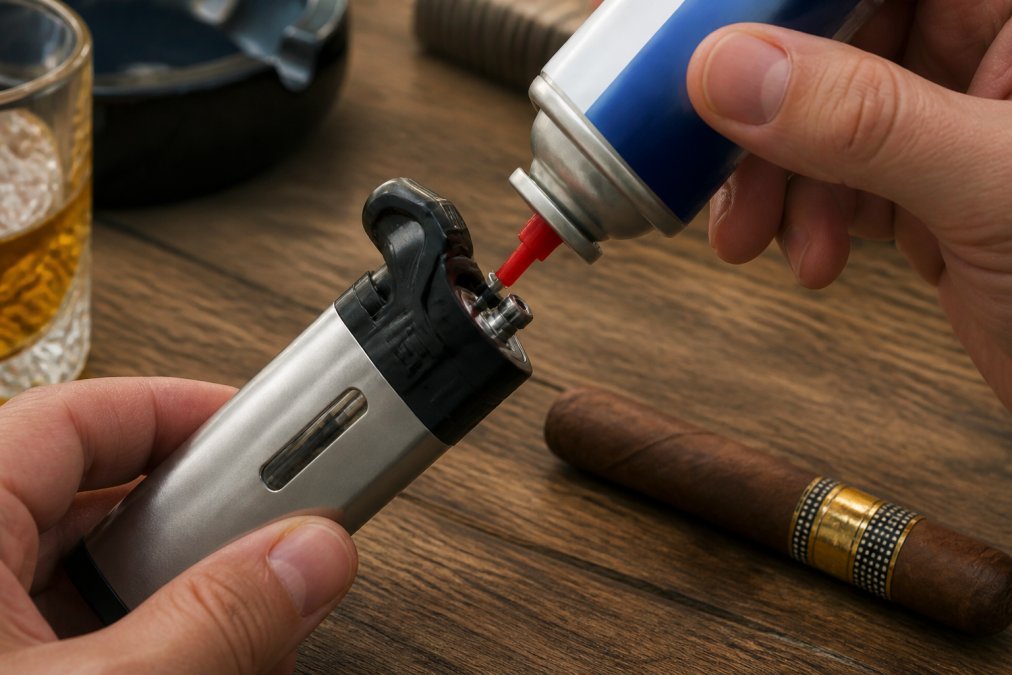
The Refill Process, Done Right
- Purge the tank first. Press the fill valve with a small tool to release leftover pressure and trapped air. Keep pressing until the hiss stops. Skipping this is the most common mistake and causes weak or sputtering flames.
- Turn the flame adjustment to its lowest setting. This reduces internal pressure during filling and helps the tank take a full charge.
- Invert the butane can and press it firmly onto the fill valve. Hold for several seconds. You'll hear fuel entering. If you feel resistance or hear spitting, reseat the nozzle and try again.
- Wait a few minutes before lighting. Let the butane reach room temperature so it vaporizes properly. Lighting a cold, freshly filled lighter causes a weak first flame that makes people think the lighter is defective.
- Adjust the flame height gradually. Small turns, then test. Over-opening the valve is how people burn out the ignition.
Purging: The Step That Separates a Two-Year Lighter from a Two-Month Lighter
Air accumulates in the tank every time you refill, causing the sputtering, weak, or intermittent flame that makes people think a lighter has failed. Purge before every refill, not just the first, until no vapor escapes.
Fixing a Clogged Jet
A jet nozzle that fires unevenly, shoots a crooked flame, or won't light is usually clogged, not broken. Trace oils and moisture in low-purity butane bake onto the nozzle over time. The fix is mechanical:
- Remove the lighter's outer shell or nozzle guard if the design allows it.
- Use a can of compressed air to blow debris out of the jet orifice, holding the can upright so no propellant sprays into the nozzle.
- For stubborn buildup, a fine wire or the tip of a sewing needle can gently clear the orifice. Go slowly. Bending the nozzle ruins the flame pattern permanently.
- Reassemble, purge, refill with high-purity butane, and test.
Long-Term Care Habits
- Purge before every refill, not just when the flame weakens.
- Store the lighter upright, away from heat, and out of direct sun.
- Use the flame adjustment to compensate for altitude and cold rather than forcing a weak lighter to fire.
- Wipe the ignition area dry after outdoor use in humid conditions.
The Aomai ZB-272 Welding Torch Lighter, at $16.95, is built for exactly this kind of long-term use. It's easily refillable with standard butane, has an accessible flame adjustment, and arrives tested for proper operation before shipping.

Best Butane Fuel for Cigar Lighters: Purity, Performance, and Altitude
The best butane fuel for cigar lighters is high-purity, filtered butane, ideally at least triple-refined. Lower-purity butane carries trace oils and moisture that build up in the jet nozzle, which is why a lighter that worked in month one starts sputtering by month six.
Practical adjustments for real conditions:
- At altitude: Open the flame adjustment slightly more than usual, and expect to refill more often.
- In cold weather: Warm the lighter in your hand before firing, and store it in an inside pocket.
- In humidity: Wipe the ignition area dry. Moisture on the piezoelectric contact is a common cause of misfires.
Toasting vs Direct Lighting: Techniques for an Even Burn
Toasting a cigar before lighting separates an even burn from a hot, bitter first third. Hold the cigar at roughly a 45-degree angle above the flame, never in it, and rotate slowly so the foot warms evenly until it darkens and glows. Then bring the cigar into the flame briefly and take a few gentle draws.
Large Jet Torch 1300-C Butane Lighter →
A few technique notes that make a real difference:
- Never let the flame touch the wrapper. Heat, not contact, is what you want.
- Rotate consistently. Stop-and-start rotation is what causes an uneven burn line.
- If the cigar starts to canoe, touch up the under-lit side rather than drawing harder.
Budget-Friendly vs Premium Torch Lighters: What You Actually Get
Spending more on a torch lighter buys build quality, ignition reliability, and finish, not a different flame. A $6.95 lighter and a $23.95 lighter both produce a butane jet; what changes is how long they last and whether they can be serviced.
Move up the range and the differences sharpen:
- Pocket Size Jet Torch by Pocket Rocket, $7.95: built for portability, stocked and shipped domestically.
- Sturdy Cigarette Case with Built In Jet Torch, $11.95: combines a king-size case and a jet torch in one unit, so you carry less.
- Extra Large Chefs Torch Lighter, $23.95: a larger body with more fuel capacity, built for frequent use and longer sessions.
The Cost Most Buyers Don't See: Fuel Purity
What you pay for butane matters as much as the lighter. High-purity, filtered butane, ideally triple-refined or better, burns clean and leaves almost no residue, while lower-purity fuel carries trace oils and moisture that bake onto the nozzle. Refined fuel is the cheapest longevity upgrade available.
Repairability: The Real Premium Feature
Repairability matters more than the initial price. A lighter with a standard fill valve, accessible flame adjustment, and a clearable nozzle will run for years on a few dollars of butane, while a sealed unit cannot be serviced no matter what you paid. A $6.95 lighter with a removable base may outlast a $23.95 sealed unit simply because you can purge, clean, and refill it properly.
How to Decide
- Smoke a few cigars a month: a budget single jet with a removable base is all you need. Spend the savings on refined butane.
- Smoke daily or outdoors year-round: step up to a larger body with more fuel capacity and a wind-resistant jet, and commit to purging and cleaning on a schedule.
- Want one lighter for cigars and workshop use: the larger, higher-capacity models earn their price through fuel capacity and grip, not flame quality.
The honest answer is that the flame is the same across the range. Buy for build quality, fuel capacity, and whether the lighter can be taken apart and kept running, not for the label.
Conclusion: Finding Your Best Torch Lighter for Cigars in 2026
The hardest part of buying a torch lighter online is trusting that what arrives matches the description and works out of the box. That's the problem Lighter Deals USA was built to solve.
Frequently Asked Questions
Which torch lighter for cigars is the best?
The best torch lighter depends on your needs. For a reliable everyday option, the Jumbo Chrome Jet Torch Lighter with electronic ignition offers consistent performance at $7.95. If you prefer a windproof design for outdoor use, the Boaters Windproof Water Resistant Jet Torch Lighter at $7.95 is a solid choice. For a larger flame and longer burn time, the Extra Large Chefs Torch Lighter at $23.95 provides more fuel capacity. All are USA-stocked and ship fast.
How do I refill a butane torch lighter properly?
First, purge the tank by pressing the fill valve with a small tool to release leftover gas. Turn the lighter upside down, insert a high-purity butane canister nozzle into the fill valve, and press firmly for 10-15 seconds. Let it sit for a few minutes to reach room temperature before igniting. Use only refined butane to prevent clogging. The Aomai ZB-272 Welding Torch Lighter is easily refillable with standard butane and ships from Texas.
Are torch lighters better than soft flame lighters for cigars?
Torch lighters produce a windproof, high-temperature jet flame that lights a cigar evenly and quickly, especially outdoors. Soft flame lighters are traditional but can struggle in wind and may leave a uneven burn if not used carefully. Torch lighters with adjustable flame height let you toast the foot without scorching. However, some purists prefer soft flame for a slower, cooler light. Both work, but torch lighters offer more precision and reliability.
What should I look for in a high-quality cigar lighter?
Look for a refillable butane tank, a fuel window to check levels, and a piezoelectric or electronic ignition for reliable sparks. Windproof performance matters if you smoke outdoors. An ergonomic body and safety lock add convenience. Flame adjustment lets you control the jet flame height. The Quad Jet Torch Lighter with four burners at $9.95 offers high heat for larger cigars, while pocket-sized models like the Pocket Size Jet Torch Lighter at $7.95 are great for travel.
How do I maintain my butane torch lighter for longevity?
Purge the tank before each refill to remove air and moisture. Use only high-purity butane (often labeled 5x refined) to avoid clogging the jet. Clean the ignition area with a soft brush or compressed air. Store the lighter in a cool, dry place. If the flame sputters, adjust the flame height or purge again. The Aomai ZB-272 is tested for proper operation before shipping and is easily refillable, making it a durable option for long-term use.
