

Best Windproof Lighters for Outdoors: 2026 Guide
Table of Contents
- What Actually Makes a Lighter Windproof for Outdoors
- Quick Comparison: Top Windproof Lighters for Outdoors
- Best Camping Lighter: What Works Around the Campsite
- Best Survival Lighter: Backup Ignition That Won't Fail
- Cold Weather Lighter Performance: What Happens Below Freezing
- Waterproof Lighter Options for Wet and Rainy Conditions
- Fuel, Battery, and Long-Term Ownership Trade-Offs
- Safety, Repairability, and Responsible Fire Use
- Frequently Asked Questions
Last Updated: October 14, 2026
What Actually Makes a Lighter Windproof for Outdoors
Windproof lighters are engineered so their flames keep burning when air moves across them, which almost always means a pressurized jet torch flame rather than a soft, open flame. At Lighter Deals USA, we sell these lighters every day, and the question we hear most is whether the windproof label is real or just marketing. It is real, but only up to a point.

Jet Torch vs. Standard Flame: The Real Difference
A jet torch lighter forces butane through a narrow nozzle under pressure, producing a blue, cone-shaped flame that resists being blown out. A standard lighter burns gas at ambient pressure, so a soft yellow flame bends and dies in even light wind. The trade-off: a jet torch burns hotter and faster, so a small tank empties sooner, and it runs louder and heats metal parts quickly.
Quick Comparison: Top Windproof Lighters for Outdoors
Every lighter below is a jet torch, stocked and shipped from our warehouse. Prices are per unit.
| Lighter | Price | Best For | Standout Trait |
|---|---|---|---|
| Boaters Windproof Water Resistant Jet Torch | $7.95 | Wet, windy boat and shore use | Water-resistant body, safety neck |
| Gold Scuba Tank Shaped Jet Torch | $10.95 | Gifts, collectors, camp kits | Novelty scuba tank shape, safety cap |
| Pocket Size Jet Torch by Pocket Rocket | $7.95 | Backpacking, everyday carry | Compact pocket footprint |
| Large Jet Torch 1300-C Butane | $6.95 | Car camping, base camp | Removable base, large body |
| Fancy Ultra Thin Jet Torch | $7.95 | Slim everyday carry | Thin, light, five colors |
| Quad Jet Torch 4 Burners | $9.95 | Plumbing, stubborn kindling | Four burners, wrist strap |
| Aomai ZB-272 Welding Torch | $16.95 | Survival kits, repair work | Refillable, brazing and soldering use |
Best Camping Lighter: What Works Around the Campsite
For campsite use, the best camping lighter is easy to hold, hard to lose, and reliable when your hands are cold. The Large Jet Torch 1300-C Butane Lighter with Removable Base fits that brief: its larger body is easier to grip than a slim pocket model, and the removable base gives you a stable stand while you light a camp stove or start kindling.
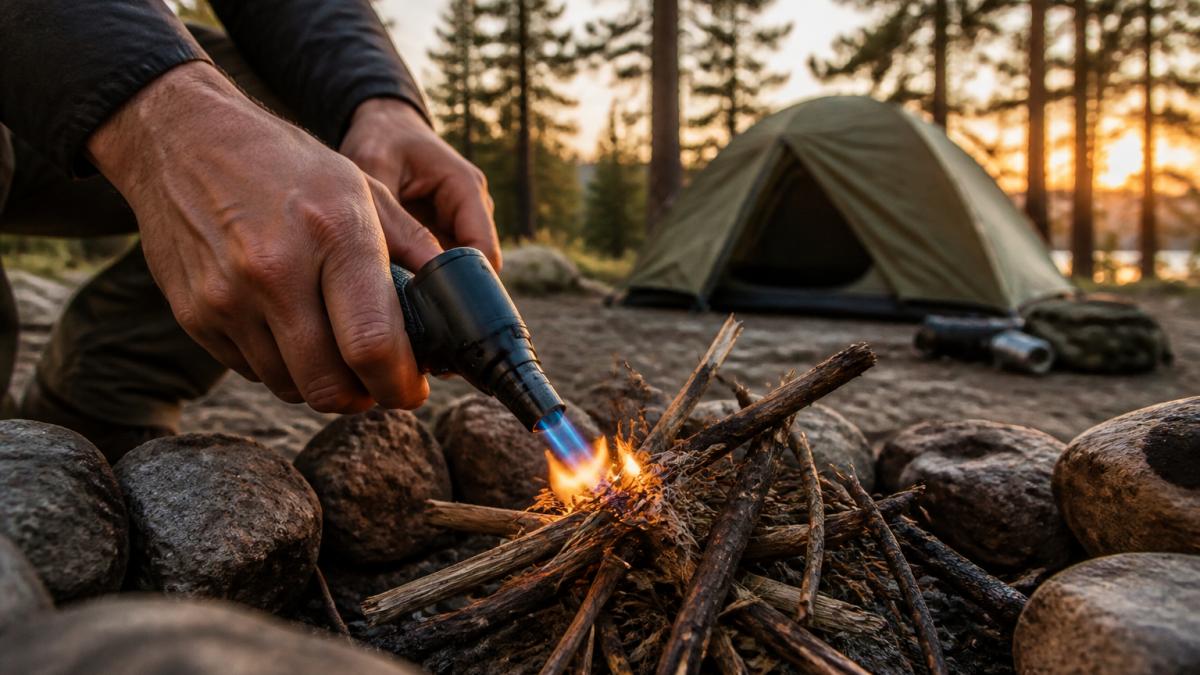
A common mistake is buying a tiny novelty lighter for camp duty and then struggling to operate it with gloves on. If you camp in shoulder seasons, size up.
Best Survival Lighter: Backup Ignition That Won't Fail
The best survival lighter is not the fanciest one; it is the one that still works after weeks in a pack, plus a second ignition source as backup.
Two habits separate a working survival lighter from a dead one: carry a backup (a ferro rod or a second cheap jet torch), and store the lighter with fuel and check it before every trip.

Cold Weather Lighter Performance: What Happens Below Freezing
Cold weather is where lighter claims get tested honestly, and it is the one condition most roundups skip. Wind resistance gets all the attention, but a lighter that laughs at a 20 mph gust can still fail at 15°F in a jacket pocket. Here is what is happening inside the lighter, and how to plan around it.
Why Butane Quits in the Cold
Butane boils at about 31°F at sea level. Below that, the liquid fuel stops producing enough vapor pressure to feed the nozzle, so the flame weakens, sputters, or never lights. A jet torch fights this better than a soft flame because the fuel is already forced through a narrow nozzle under pressure, but it is not immune: expect a drop in flame height and a fussier ignition as temperatures fall through the 30s and into the 20s.

Altitude Changes the Math
Cold and altitude compound each other. As you climb, atmospheric pressure drops, and a butane jet torch that runs rich at sea level can run lean or fail to sustain a flame at higher elevations. Backpackers commonly report that a torch that worked flawlessly at the trailhead needs a longer warm-up and a slower strike above roughly 8,000 feet, and some models will not hold a steady flame.
A Repeatable Cold-Weather Test You Can Run at Home
You do not need a lab to know how your lighter behaves. Try this before any winter trip:
- Leave the lighter outside or in a freezer set near your expected low for at least 30 minutes. Do not warm it in your hand first.
- Step outside and attempt five strikes in a row, timing how long each takes to produce a stable flame.
- Note whether the flame is full height or visibly reduced.
- Repeat the same five-strike test with the lighter warmed in an inside pocket for five minutes.
- Compare the two results. The gap between them tells you how much body heat is doing the work.
Most practitioners find a pocket-warmed jet torch lights reliably into the low 20s, while a cold-soaked one becomes a coin flip below freezing.
What Actually Works in the Field
- Carry it against your body, not in an outer pocket. An inside chest or pants pocket keeps the fuel near body temperature; an exterior pack pocket is the same as leaving it on the snow.
- Warm it in your hand for 30-60 seconds before striking. This restores vapor pressure in most conditions.
- Purge and refill with a high-quality butane. Trapped air and moisture make cold starting worse.
Waterproof Lighter Options for Wet and Rainy Conditions
For wet and rainy conditions, the closest thing to a waterproof lighter is a water-resistant jet torch with a sealed body, and the Boaters Windproof Water Resistant Jet Torch Lighter with Safety Neck is built for exactly that at $7.95.
No lighter is truly submersible, so treat "waterproof lighter" as shorthand for "survives splashes and damp pockets." Dry the ignition area if it gets soaked, and shake the nozzle before striking.
Fuel, Battery, and Long-Term Ownership Trade-Offs
Fuel and battery life decide whether a lighter is worth owning long term, and they are the numbers most roundups never put on the page. A lighter that costs $8 and needs a refill every weekend is a different tool than one that sits in a pack for a season. Here is how to think about endurance over an extended trip.
Boaters Windproof Water Resistant Jet Torch Lighter With Safety Neck S →
Estimating Usable Ignitions
A small pocket jet torch and a large-body torch do not hold the same amount of fuel, and the difference shows up fast when you light a stove three times a day. Use a simple field estimate:
- Count how many times you actually strike the lighter on a typical day. Stove lighting, kindling, and a backup candle add up quickly.
- A short burst uses far less fuel than a sustained flame. Holding the trigger for 10 seconds to light damp kindling burns many times the fuel of a one-second stove light.
- A partially filled tank loses pressure before it loses fuel, so the last usable ignitions are the weakest ones.
The practical takeaway: a compact jet torch is a fine day-trip tool and a marginal multi-day primary. For a week-long trip, carry a larger-body model, carry a spare, or plan a refill.
Refill and Recharge Cadence
Butane jet torches are refillable, cheap to run, and unaffected by charging, but they lose fuel slowly even when unused. A lighter that sat in a drawer for six months is not full, even if you never touched it.
Electric arc lighters need no fuel, but they need charging, and their batteries age whether you use them or not. An arc lighter typically holds a charge well for the first year or two and then loses capacity, at which point the sealed battery is not user-replaceable.
Fuel Evaporation and Storage
Fuel evaporation is normal and unavoidable. The rate depends on how well the fill valve and O-rings seal, and a worn O-ring bleeds fuel noticeably faster than a new one. Store lighters upright, at moderate temperature, and away from direct sun; in a vehicle, seasonal temperature swings accelerate both evaporation and seal wear.
Multi-Day Trip Planning
For trips longer than a weekend, plan ignition like you plan water:
- Primary: a refillable jet torch, topped up the morning you leave.
- Backup: a second ignition source that does not share the primary's failure mode. A ferro rod or waterproof matches cover a dead lighter, a lost lighter, and a cold-soaked lighter.
- Refill or spare: for trips over about four or five days of regular stove use, carry a small fuel canister or a second lighter.
Repairability and Expected Service Life
Refillable jet torches win on repairability. A weak flame usually means trapped air or a dirty nozzle, both fixable at home with a purge and a refill. Check the O-ring and fill valve if a lighter leaks; those fail first, and on many models they can be replaced. Disposable models are the least repairable and least worth repairing. Buy a lighter you can actually refill, and treat the fill valve and O-ring as wear items.
Safety, Repairability, and Responsible Fire Use
Safety and repairability are the two things most lighter roundups skip, and they matter most in the field.
On repairability, refillable jet torches win. A weak flame usually means trapped air or a dirty nozzle, both fixable at home with a purge and a refill.
Picking a windproof lighter for the outdoors comes down to matching the tool to the trip: a water-resistant jet torch for wet conditions, a refillable workhorse for survival kits, and a warm pocket for cold mornings.
Frequently Asked Questions
What is the best lighter for outdoors?
A jet torch lighter is the best choice for outdoors because it produces a wind-resistant flame that holds up in breezy conditions. Look for a model with a safety cap or neck, like the Boaters Windproof Water Resistant Jet Torch Lighter, which is designed for wet and windy use. Refillable butane models give you long-term reliability, and carrying a backup ignition source is always smart for camping or hiking.
What is a good lighter for cold weather?
A butane jet torch lighter works well in cold weather as long as you keep it warm in an inside pocket before use. Butane pressure drops in freezing temperatures, which can weaken the flame. A cold weather lighter with a sealed O-ring and safety cap, such as the Gold Scuba Tank Shaped Windproof Jet Torch Lighter, helps maintain consistent ignition. Always test your lighter before a winter trip.
Are torch lighters reliable in windy conditions?
Yes, torch lighters are generally reliable in windy conditions because the jet flame is pressurized and resists being blown out. However, windproof claims vary by model. A lighter with a recessed nozzle and a safety cap performs better in strong gusts than an exposed flame design. The Quad Jet Torch Lighter, with four burners, delivers a concentrated flame that holds up well in outdoor use.
Which outdoor lighter works when it is wet?
A waterproof lighter with a sealed O-ring and a safety cap is your best bet in wet conditions. The Boaters Windproof Water Resistant Jet Torch Lighter is built for this. After exposure to rain, dry the ignition area and shake off excess moisture before striking. Keeping the lighter in a dry pocket or pouch also prevents water from reaching the ignition mechanism.
Is a plasma lighter a good choice for camping?
A plasma lighter can work for camping, but it has limits. It uses an electric arc instead of fuel, so there is no butane to evaporate or refill. However, battery life matters on multi-day trips, and cold temperatures drain batteries faster. For extended camping or survival use, a refillable butane jet torch lighter is often more dependable because you can carry spare fuel and refill on the go.
