

How to Clean Jet Torch Lighter: Step-by-Step
Table of Contents
- What You'll Need Before Starting
- How to Bleed a Butane Lighter
- How to Unclog a Lighter Nozzle
- Removing Carbon Buildup and Residue
- Best Butane Fuel for Torch Lighters
- Refilling and Adjusting Flame Height
- Troubleshooting Ignition Issues
- Common Mistakes to Avoid
- Frequently Asked Questions
Last Updated: October 2, 2026
What You'll Need Before Starting
Gather these supplies before starting to clean jet torch lighter:

- Butane canister (for refilling after cleaning)
- Rubbing alcohol (isopropyl, 90% or higher)
- Cotton swabs or soft cloths
- Thin wire or pin (for clearing small passages)
- Compressed air can
- Small bowl or container
- Paper towels
- Safety glasses
Work in a well-ventilated area and keep all tools within arm's reach.
How to Bleed a Butane Lighter
Bleeding removes all remaining fuel before cleaning. Locate the fuel valve at the bottom of your lighter and hold it upside down over a sink. Press the valve with a thin pin until hissing stops (30-60 seconds). Don't rush, residual pressure can cause fuel to spray unexpectedly.
If your lighter has a removable base, unscrew it gently for better access to the fuel chamber and valve.
How to Unclog a Lighter Nozzle
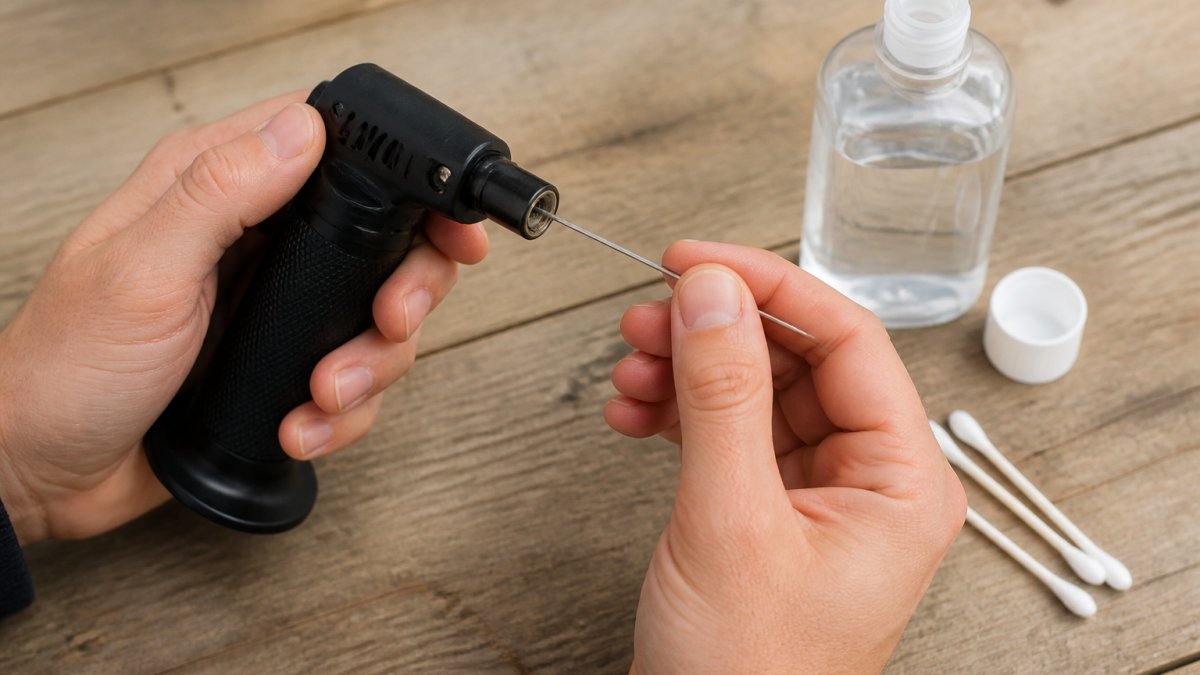
Examine the nozzle for visible blockages, ash, or carbon buildup. Use a thin wire to gently probe and dislodge debris, turning the lighter to reach all sides. Work carefully, the nozzle is delicate.
Blow out loosened debris with short bursts of compressed air (nozzle-down), repeating 2-3 times. For stubborn clogs, soak the nozzle in rubbing alcohol for 5-10 minutes, then use the wire again to clear loosened material.
Removing Carbon Buildup and Residue
Carbon and tar accumulate inside and around the nozzle. These deposits block gas flow and weaken the flame. Removing them restores your lighter to full power.
Using Rubbing Alcohol for Nozzle Cleaning
Pour rubbing alcohol into a bowl and use a cotton swab to wipe the nozzle exterior and crevices. For deeper cleaning, hold the lighter nozzle-down and let alcohol drip into the opening for 30 seconds, then blow it out with compressed air. Repeat 2-3 times. Air dry for at least 30 minutes before refilling.
Compressed Air for Debris Removal
Use short bursts of compressed air (nozzle-down) to clear debris from the nozzle and fuel valve. Pause between bursts to let particles settle. A final burst removes moisture after alcohol cleaning.
Best Butane Fuel for Torch Lighters
The quality of butane directly determines how often your lighter will clog. Understanding why requires knowing what happens during fuel refinement and storage.
How Butane Refinement Affects Clogging
Ultra-refined butane (5x-6x refined) produces minimal ash and tar, requiring cleaning every 6-8 weeks. Standard 2x-refined butane contains moisture, sulfur, and particulates that cause carbon buildup, requiring cleaning every 2-3 weeks.
Storage and Degradation
Store butane in a cool, dark cabinet below 77°F. Heat, humidity, and light degrade fuel and introduce moisture that corrodes internal parts and blocks the fuel valve.
Identifying Quality Butane
Buy butane labeled "5x refined" or "ultra-refined" from specialty retailers (cigar shops, tobacco stores). Avoid cans that don't specify refinement level or feel unusually light.
Cost vs. Maintenance Trade-Off
Ultra-refined butane ($5-6/can) requires cleaning every 6-8 weeks, while standard fuel ($3-4/can) needs cleaning every 2-3 weeks. Over a year, ultra-refined saves money and time despite higher per-can cost.
Switching Fuels After Poor Performance
If your lighter misfires after refilling, bleed it fully, clean the nozzle and fuel passages, then refill with ultra-refined butane. If performance improves, fuel quality was the problem. If issues persist, the lighter needs professional service.
Refilling and Adjusting Flame Height
Insert the butane nozzle firmly into the fuel valve for 2-3 seconds (one or two short bursts only). Wait 30 seconds before testing ignition. Use the adjustment wheel at the base to set flame height: clockwise to increase, counterclockwise to decrease. For outdoor use, set flame higher to resist wind. If the flame is uneven, repeat the nozzle cleaning steps.
Troubleshooting Ignition Issues
Ignition problems fall into two categories: the ignition system itself (spark generation) and the fuel system (fuel delivery). Knowing which category your problem falls into narrows down the fix.
Understanding Your Ignition Type
Piezo-electric lighters produce a clicking sound with no visible moving parts. Spark-wheel lighters have a visible metal wheel on the side that spins when you press the button. Identify which type you have before troubleshooting.
Ignition System Failures (No Spark)
Piezo-electric lighters:
If you hear no clicking sound, the piezo element has likely failed (not repairable) or the ignition button is stuck. Try pressing the button 10-15 times firmly; if it frees up, the lighter may work. If stuck, the lighter needs replacement.
Spark-wheel lighters:
If the wheel doesn't spin, soak the lighter in rubbing alcohol for 15 minutes and gently work alcohol around the wheel's edges. If the wheel spins but produces no sparks, the flint rod is worn and needs replacement (check your manual for replaceable cartridges). A cracked or broken wheel requires lighter replacement.
Fuel System Failures (Spark But No Flame)
If you hear ignition but no flame, the fuel valve may be clogged. Bleed the lighter, soak the valve in rubbing alcohol for 10 minutes, probe gently with a thin wire, blow compressed air upward for 3-5 bursts, then refill and test. If this fails, the valve is internally damaged.
If the fuel valve is clear, the fuel line may be blocked. Bleed the lighter, soak it in rubbing alcohol for 20 minutes, blow compressed air through the fuel valve opening, repeat 2-3 times, air dry for 1 hour, then refill and test.
If the lighter won't ignite after refilling, check if the tank is actually full. Bleed the lighter for 10 seconds; if you hear hissing, fuel is present. If not, refill with firm, steady pressure for 2-3 seconds.
Aomai ZB-272 Welding Torch Lighter →
Weak or Sputtering Flame
A weak or sputtering flame usually indicates a partially clogged nozzle. Probe each jet opening with a thin wire, soak the nozzle in rubbing alcohol for 5-10 minutes, blow compressed air upward for 3-5 bursts, then refill and test. If the flame remains weak, the nozzle is permanently damaged.
Flame height set too low:
Your lighter has an adjustment wheel or screw at the base. This controls how much fuel reaches the nozzle.
- Locate the adjustment wheel (usually at the bottom of the lighter)
- Turn it clockwise to increase flame height
- Make small adjustments (1/8 turn at a time) and test between adjustments
- Find the height that produces a consistent, full jet
If the flame is still weak at maximum adjustment, the nozzle is likely clogged (see above).
Fuel quality issue:
Low-quality or degraded butane burns incompletely, producing a weak flame.
- Bleed the lighter completely
- Refill with ultra-refined butane (see "Best Butane Fuel for Torch Lighters")
- Test ignition 5-10 times
If the flame becomes stronger and more consistent, your previous fuel was the problem.
Flame Goes Out in Wind
The flame extinguishes when exposed to air movement, even gentle breeze.
Flame is too small:
A weak jet cannot resist wind pressure. Increase the flame height using the adjustment wheel (turn clockwise). A properly adjusted jet torch flame should remain lit in moderate wind.
Nozzle is partially clogged:
Partial blockage restricts fuel flow, producing a weak flame. Follow the cleaning steps in "Unclog a Lighter Nozzle" and "Weak or Sputtering Flame" above.
Nozzle opening is too large:
If the nozzle has been damaged (scratched, enlarged, or cracked), the fuel disperses instead of forming a tight jet. A damaged nozzle cannot be repaired and requires lighter replacement.
Lighter Gets Very Hot
The lighter body becomes uncomfortably hot during use.
Flame height is set too high:
Excessive fuel flow creates a larger flame that heats the lighter body. Lower the flame height using the adjustment wheel (turn counterclockwise). A properly adjusted flame should be hot enough to light cigars or perform tasks but not so hot that the lighter body becomes painful to hold.
Ignition button is held down continuously:
Don't hold the button down. Press and release. Continuous ignition overheats the lighter and wastes fuel.
Fuel valve is leaking:
Common Mistakes to Avoid
Learning what NOT to do saves you from damaging your lighter or injuring yourself.
Frequently Asked Questions
How often should you bleed a butane lighter?
Bleed your jet torch lighter every 1-2 months if used regularly, or every 3-4 months if used occasionally. Bleeding removes air pockets and old fuel residue that can weaken the spark and reduce flame consistency. If you notice weak ignition or uneven flame height, bleed immediately rather than waiting for your scheduled maintenance.
Can you use rubbing alcohol to clean a lighter nozzle?
Yes, rubbing alcohol is effective for cleaning clogged nozzles. Soak a cotton swab in 90% isopropyl rubbing alcohol and gently scrub the nozzle opening and valve. This removes tar, ash, and carbon deposits that block fuel flow. Allow the lighter to dry completely before refilling with butane, as any alcohol residue can interfere with ignition.
Why do jet flame lighters stop working?
Jet torch lighters typically stop working due to air pockets in the fuel tank, clogged nozzles from carbon buildup, or low butane pressure. Other causes include a faulty piezo-electric ignition system, debris blocking the valve, or using low-quality butane that leaves excessive residue. Regular bleeding, nozzle cleaning, and quality fuel prevent most ignition failures.
What's the best way to revive a torch lighter that won't ignite?
First, bleed the lighter completely by holding the valve open for 10-15 seconds to remove all fuel and air pockets. Then clean the nozzle with rubbing alcohol and a cotton swab to clear any carbon or debris. Refill with high-quality butane, adjust the flame height wheel if needed, and test the spark. If the piezo-electric ignition still fails, the ignition system may need professional repair.
