

How to Fix a Clogged Lighter Nozzle
Last Updated: October 28, 2026
Quick Summary
To fix a clogged lighter nozzle, empty the lighter, blow out loose debris with short bursts of compressed air, brush the nozzle area, swab it with isopropyl alcohol, and clear the jet hole with a pin using light pressure only. Let it dry fully for a few minutes before reassembly. The whole job takes about 15 minutes with basic tools.
- Never use a wire or drill bit to ream out the nozzle, since a scratch ruins gas flow permanently.
- Bleed the tank by pressing the fill valve until the hiss stops, then repeat once more.
- Air trapped in the tank causes weak, flickering flames even with a perfectly clean nozzle.
- Replace the lighter if the fuel tank is cracked or leaking, since that is a safety issue.
- Use short bursts of compressed air rather than a long blast to avoid pushing debris deeper.
Table of Contents
- Why Your Clogged Lighter Nozzle Stops Working
- Tools and Safety Steps Before You Start
- How to Clean a Jet Torch Lighter Nozzle Step by Step
- How to Bleed a Butane Lighter Before Refilling
- Butane Torch Lighter Not Working? Check These Causes
- Torch Lighter Flame Adjustment After Cleaning
- When to Stop Fixing and Replace the Lighter
- Shop Reliable Torch Lighters at Lighter Deals USA
- Frequently Asked Questions
Why Your Clogged Lighter Nozzle Stops Working
A clogged lighter nozzle is the small brass or steel outlet on a butane lighter where gas escapes and meets the spark. When lint, dust, or sticky residue blocks that opening, the gas can't flow freely, so you get a weak flame, a sputtering flame, or no flame at all.
Most torch lighters don't actually break. They clog. The mechanism is simple: every time you fire the torch, a tiny amount of gas vaporizes at the nozzle, and impurities in the fuel plus airborne dust settle there over time.
Here's what most guides get wrong. They tell you to blast the nozzle with compressed air and call it done. That pushes some debris deeper into the jet.
The good news: you can fix a clogged lighter nozzle at home with a few basic tools and about 15 minutes. Below are steps, from safety prep to flame adjustment.
Tools and Safety Steps Before You Start
Butane is flammable, so safety comes first. Work in a well-ventilated area away from open flames, and never clean a lighter that's hot to the touch.
Gather these tools before you begin:
- Compressed air can with a straw nozzle
- A soft brush or clean toothbrush
- A pin or fine needle
- Isopropyl alcohol and a cotton swab
- A clean cloth or paper towel
- Safety glasses
A quick word on pressure. Use short bursts of air, not a long blast.
Watch out: never use a wire or drill bit to ream out the nozzle. The jet hole is measured in fractions of a millimeter, and a scratch there ruins the gas flow permanently.
How to Clean a Jet Torch Lighter Nozzle Step by Step
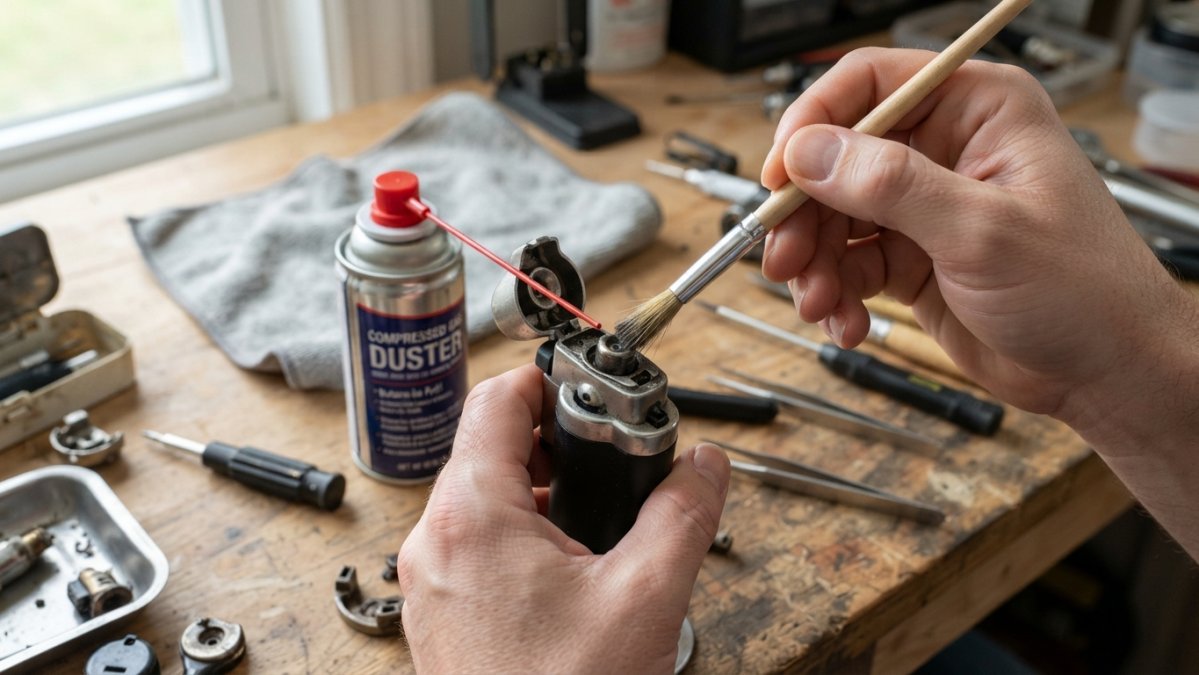
Cleaning a jet torch lighter nozzle follows a clear sequence. For a deeper, dedicated walkthrough, see our How To Clean Jet Torch Lighter article. Do the steps in order, and don't skip the drying step at the end.
- Empty the lighter. Bleed all remaining gas before you start. We cover this in the next section.
- Remove the outer casing if your model allows it. Most torch lighters have a screw or snap-fit shell.
- Blow out loose debris with short bursts of compressed air, holding the can upright.
- Brush the nozzle area gently to lift dust and lint from around the jet.
- Swab with isopropyl alcohol. A cotton swab dipped in alcohol dissolves sticky residue from impure fuel.
- Clear the jet hole with a pin, using light pressure only. Never force it.
- Let it dry fully for a few minutes before reassembly.
**
How to Bleed a Butane Lighter Before Refilling
Bleeding a butane lighter means releasing trapped air and residual gas from the fuel tank before you refill it.
Here's the process:
- Hold the lighter upright and let it reach room temperature.
- Press the fill valve with a small screwdriver or the tip of a pen.
- Listen for the hiss. When it stops, the tank is empty.
- Repeat once more to clear any remaining pressure.
- Refill with quality butane, then wait a minute before firing.
Air trapped in the tank causes weak, flickering flames even with a perfectly clean nozzle. If you're refilling for the first time in a while, our butane lighter refill steps walk through the full procedure.
Butane Torch Lighter Not Working? Check These Causes
A butane torch lighter that won't work can have several possible problems, including a clogged nozzle, trapped air in the tank, a worn ignition electrode, or low-quality fuel. Rule out the simple causes first.
Run through this checklist:
- No spark? Check the ignition wire and clean soot off the electrode.
- Spark but no flame? The nozzle is likely clogged or the tank has air in it.
- Weak, yellow flame? Impure fuel or a partially blocked jet.
- Flame dies after a second? The tank needs bleeding and a proper refill.
For ongoing care, our guide to refillable lighter maintenance covers the habits that prevent repeat clogs.
| Symptom | Likely Cause | Fix |
|---|---|---|
| No spark | Dirty or worn electrode | Clean or replace |
| Spark, no flame | Clogged nozzle or air in tank | Clean and bleed |
| Weak yellow flame | Impure fuel | Refill with refined butane |
| Flame dies quickly | Trapped air | Bleed and refill |
Torch Lighter Flame Adjustment After Cleaning
Once your lighter is clean and refueled, adjust the flame before you use it. Our Lighter Flame Adjustment Guide walks through dialing in the flame height safely.
When to Stop Fixing and Replace the Lighter
Some clogs aren't clogs. If you've cleaned the nozzle, bled the tank, refilled with good fuel, and the lighter still won't hold a steady flame, there may be another problem.
Replace the lighter when you notice:
- A cracked or leaking fuel tank
- A nozzle that won't seal after cleaning
- An ignition system that fails after electrode cleaning
- Casing damage that exposes internal parts
A leaking tank is a safety issue, not a repair project. Stop using it.
If you're ready for a lighter, our collection of best refillable torch lighters features models built for durability. We stock every lighter here and ship fast nationwide, with a secure checkout.
Shop Reliable Torch Lighters at Lighter Deals USA
A clogged lighter nozzle is a maintenance problem, not a death sentence for your torch. Clean it properly, bleed the tank, and use refined butane.
At Lighter Deals USA, we curate premium, high-quality lighters, including unique options such as novelty gun-shaped jet torch lighters and electric lighters. We offer fast, reliable nationwide shipping and a secure, encrypted checkout. Michael R. said, “Prompt shipping and accurate product description. No problems.”
Get started with Lighter Deals USA and shop our curated collection of lighters.
Frequently Asked Questions
How do you unclog a butane lighter nozzle?
First, make sure the lighter is empty and has been bled of pressure. Then use compressed air or a thin cleaning tool to clear debris from the jet opening. A small brush dipped in rubbing alcohol can help remove soot and lint. After cleaning, let the lighter dry fully, refill it with butane, and test the flame.
Why is my torch lighter nozzle clogged?
Clogs can come from dust, lint, or soot collecting in the tiny jet opening.
Can you clean a lighter nozzle with a pin?
A pin can help loosen surface debris. The jet hole on a torch lighter is very small.
Should you bleed a butane lighter before cleaning it?
Bleeding a butane lighter releases leftover gas and pressure.

